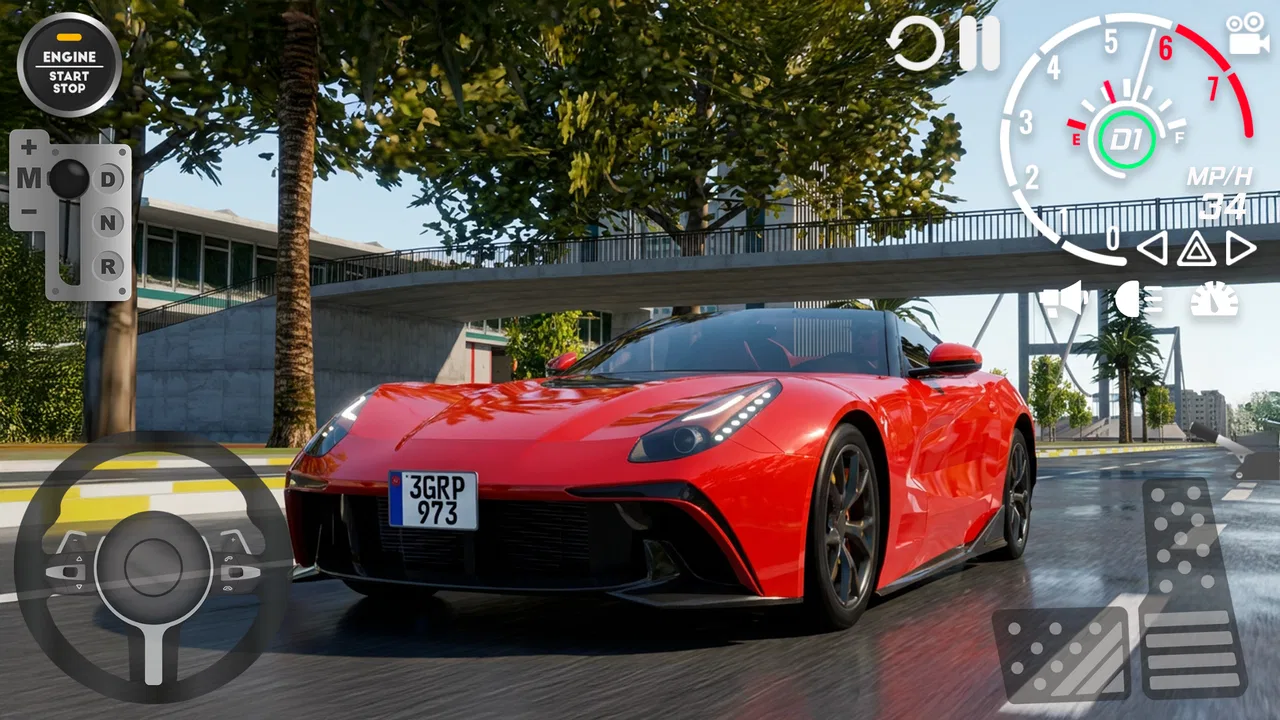
Fast&Grand: Car Driving Game
- 4.6
- Rating
- 10.00M
- Installs
- Free
- Price

 Analysis by App-foxy
I approached Fast&Grand: Car Driving Game expecting a quick mobile racer, but its appeal is slightly different. This is a free racing game built around driving through an online open-world city, so the pleasure comes less from a carefully staged championship and more from the feeling of taking a car out, finding a route, and sharing the road with other players. My overall view is positive: it is an accessible choice for casual driving sessions, especially if you enjoy open environments more than strict lap-by-lap competition.
The important distinction is that this is not trying to replace a serious simulation or a deep console-style racing game. It is easier to pick up, more relaxed in its basic idea, and better suited to short bursts of play. At the same time, that accessibility brings compromises. Players looking for highly precise handling, a carefully structured career, or a completely quiet offline experience may find the game less satisfying than a dedicated single-player racer.
What makes the city-driving format work
The city setting gives the game its strongest identity. Instead of repeatedly circling a small selection of tracks, I can treat the environment as a place to drive through. That changes the rhythm of play. A short session can be about moving around and getting comfortable with the roads, while a longer one can become more competitive when other players are involved. The open-world structure also makes the game feel less rigid than a traditional racing menu filled with isolated events.
You May Also Like

 Blood Strike: 2.5 Anniversary
Blood Strike’s Loadouts Turn Every Drop Into a Tactical Gamble
A close look at Blood Strike’s custom loadouts: how fast access to signature weapons reshapes its battle royale rhythm, rewards preparation, and narrows the gap between fights.

 Pandora - Music & Podcasts
Pandora’s Music Is Easy to Start, but Harder to Recover
Pandora’s strength is its low-effort path from a seed to a station. Its weak spot is how much confidence it asks you to place in connection, setup, and quiet recovery.

 8 Ball Pool
 Is Built on Rivalries, Rematches, and Routine
A close look at the rivalries, rematches, shared routines, and unanswered safety questions that turn a quick pool match into a persistent mobile community.

 Samsung Music
’s Quiet Strength Is Playing What You Already Own
Its reach comes less from spectacle than from dependable access to a personal library. That simplicity is both the app’s strongest retention engine and its ceiling.

 AccuWeather: Weather Radar
AccuWeather Review: A Quick, Clear Forecast for Everyday Decisions
For everyday plans, the best forecast is the one you can understand quickly. AccuWeather makes rain timing, radar, and local conditions easy to act on, with a few trade-offs.

 Hill Climb Racing
Why Hill Climb Racing Still Turns Crashes Into One More Run
A tiny car, a bumpy hill and one more upgrade: Hill Climb Racing keeps resurfacing because its simple chaos makes every near-miss feel personal.
More From Our News Desk



I like this format when I want immediate action without committing to a long campaign. The game’s multiplayer racing focus adds energy because the city is not only a backdrop; it becomes a shared space where the presence of other drivers can make an ordinary drive feel more unpredictable. That is a useful difference from many mobile racers that push the player from one short event to the next with little sense of place.
Still, an open city is only valuable when the driving itself remains enjoyable. Here, the best experience comes from treating the game as an arcade-leaning driving playground rather than a technical simulator. I found that mindset helpful. Instead of judging every turn by real-world precision, I paid more attention to how quickly I could get into a session, how naturally I could explore, and whether the city made me want to keep driving after the first few minutes.
The short description, “Fast&Grand,” captures the intended mood better than a detailed explanation would. The game wants to feel quick and spacious at the same time. It is not a quiet driving meditation, nor is it a demanding motorsport study. Its middle ground is the reason it can appeal to people who enjoy car games but do not want to learn complicated controls before having fun.
Starting a session without much friction
One of the practical strengths is the low barrier to entry. The game is free, carries an Everyone content rating, and supports devices running Android 6.0 or later. That makes it approachable for families and for players who simply want to test a driving game without paying before they know whether the style suits them. The broad compatibility also helps explain why it has reached more than ten million installs.
I would still recommend giving the controls a few minutes before deciding whether the game is for you. Mobile driving feels very different depending on screen size, grip, and personal preference. A player who normally enjoys touch steering may settle in quickly, while someone used to physical buttons or a controller may need more adjustment. That is not a flaw unique to this title, but it matters more in a game where the city and multiplayer activity encourage frequent turns and corrections.
For a realistic everyday use case, imagine having a short break between errands. You can open the game, drive around for a while, and leave without needing to remember a complicated story or finish a lengthy race. On another day, you might have more time and use the same city as a casual meeting point for competitive driving. That flexibility is more convincing to me than the idea that every session must deliver a major achievement.
Where the multiplayer setting adds value
The online element changes the emotional tone. In a solo racer, the road is predictable and the challenge is usually controlled by the game. With other drivers present, the city feels more active. Even when I am not treating the session as a serious contest, seeing other cars can encourage me to change direction, take a risk, or stay out longer than planned.
That said, multiplayer is not automatically better for every player. Some people want a calm drive with no distractions, and others prefer competition that is carefully balanced around identical conditions. An open-world multiplayer format can feel less orderly than a conventional race. If your enjoyment depends on clean starts, clear track limits, and a precise finishing order, a dedicated track racer may be a better match.
My advice is to decide what you want from the session before playing. Use the game as a relaxed city-driving experience when you want freedom, and approach multiplayer as a source of unpredictability rather than a guaranteed professional-style contest. That small change in expectation prevents the most common disappointment: expecting a structured racing championship from a game designed around a shared urban playground.
Handling, pace, and the arcade trade-off
The driving is most enjoyable when I stop asking it to behave like a full simulation. The appeal is immediate movement and the sensation of controlling a fast car through a large environment. That makes it suitable for players who value responsiveness and spectacle over detailed mechanical realism.
The trade-off is important. A more simulation-focused game would usually reward careful braking, exact corner entry, and a deeper understanding of vehicle behavior. Fast&Grand: Car Driving Game is better approached as a lighter alternative. That does not make it shallow by definition, but it does mean that players who want every car to demand a radically different technique may eventually want something more specialized.
I also found that open-world driving can expose weaknesses that a fixed circuit hides. A track gives the designer control over pacing and direction, while a city must support wandering, turning, and unexpected encounters. When the environment is the main attraction, the quality of the drive depends on whether moving through it remains engaging after the novelty fades. This is why I see the game as strongest in shorter, repeatable sessions rather than as a title I would necessarily play for hours without a break.
What the free model means for regular players
The game costs nothing to download, but it includes in-app purchases ranging from $2.49 to $37.99 per item. That is worth considering before settling into it as a daily game. Free entry is convenient, especially for curious players, but optional spending can affect how comfortable the long-term experience feels depending on what the player wants to unlock or improve.
I would approach the purchase system with a simple rule: play first, decide later. If the basic driving loop already gives you enough enjoyment, there is no reason to spend immediately. If you find yourself returning often and wanting more convenience or content, you can then judge whether an individual purchase feels worthwhile. This is a better approach than treating every visible upgrade as necessary.
For parents, the Everyone rating makes the game broadly approachable, but the presence of in-app purchases still deserves attention on a shared device. The age rating describes the content, not a family’s preferred spending rules. I would check the device’s purchase settings before handing it to a child, particularly if the game becomes a regular source of entertainment.
The free structure also affects how I compare it with paid racing games. A paid title may offer a cleaner, more predictable package from the start, while this one lets you try the central idea without an upfront commitment. Neither model is automatically superior. The right choice depends on whether you value experimentation and accessibility or prefer paying once for a more controlled experience.
How it compares with other mobile racing choices
Compared with a traditional circuit racer, this game offers more freedom and less emphasis on repeating formal laps. That makes it a stronger choice for someone who wants to roam through a city and encounter other drivers. A circuit-focused alternative is likely better for a player who wants clear progression, tightly designed tracks, and a strong sense of measurable improvement from one race to the next.
Compared with a realistic driving simulator, the game is easier to approach but less suitable for studying authentic vehicle behavior. A simulator may reward patience and precision, whereas this title is more inviting when the goal is quick entertainment. If you enjoy tuning your technique around braking points and handling differences, you may outgrow the simpler style here. If you mainly want to drive a fast car through an open environment, the lighter approach is an advantage.
It also differs from purely offline arcade racers. The online city gives it a social and unpredictable quality, but that means it is not the ideal choice for someone who wants the same controlled experience every time. I would select an offline alternative for travel, limited connectivity, or uninterrupted solo play. I would select this game when the shared-world atmosphere is part of the appeal.
Three practical ways to get more from it
First, I recommend using the opening sessions to learn the city rather than chasing the fastest possible result. Knowing where you are and how the roads connect makes later driving feel less reactive. In an open environment, route familiarity can be more useful than simply pushing the car harder. This is a small but meaningful advantage that is easy to miss if every session is treated as a sprint.
Second, separate exploration from competition. When I am learning the driving feel, I avoid turning every encounter into a contest. That lets me notice how the car responds and whether the control method feels comfortable. Once the basics are familiar, multiplayer becomes more enjoyable because I am making deliberate choices instead of struggling with the interface at the same time.
Third, use short sessions as a test of long-term fit. The game is at its best when I can enjoy a quick drive without needing a large reward at the end. If the first few sessions are fun only because the setting is new, the open-world loop may not hold my attention. If I continue to enjoy simply driving and reacting to the city, that is a strong sign that this is the right kind of racer for me.
A fourth useful habit is to keep spending separate from enthusiasm. The game’s purchase range is wide enough that an impulsive decision can change the value of the experience. I would wait until I know whether I prefer exploration or multiplayer competition, then spend only if a particular addition genuinely improves the way I play. The free starting point makes that patience possible.
Who should play it, and who should skip it
I think the best audience is made up of casual racing fans, open-world driving fans, and players who like the idea of meeting other cars in a city rather than selecting only formal races. It is also a sensible option for someone who wants a free first step into mobile car games without committing to a premium purchase. The Everyone rating and Android 6.0 minimum make it approachable for a wide range of users.
It suits me particularly well when I have ten or fifteen minutes and want something active but not mentally demanding. I can drive, experiment with routes, and decide whether to stay longer. That kind of flexible session design is the game’s clearest everyday strength.
I would skip it if my priority were a serious simulation, a deep single-player career, or a fully controlled offline experience. I would also be cautious if I disliked online interaction or if I needed every race to feel carefully balanced and predictable. In those cases, a dedicated simulator, an offline arcade racer, or a structured circuit game would probably deliver a better fit.
The developer, CANDY GAMES LTD., has positioned this as a broad-access racing experience rather than a niche technical product. Its average rating of 4.7 from around 57 thousand ratings suggests that many players respond well to the formula, while roughly 1.4 thousand written reviews show that the game has generated substantial player feedback. I would treat those figures as encouragement to try it, not as proof that every driving preference will be satisfied.
My final recommendation
Fast&Grand: Car Driving Game is most successful as a casual online city racer, not as a full driving simulation. Its strongest qualities are the open-world setting, quick accessibility, and the extra energy created by multiplayer driving. It gives me a reason to return for short sessions because the city feels more inviting than a simple list of disconnected races.
Its limitations are equally clear. Players seeking exact handling, carefully staged competition, or a substantial offline progression system should look elsewhere. The free-to-play structure also deserves a measured approach, especially when in-app purchases range from $2.49 to $37.99 per item.
The current version is 10.0.3, and the game was released on March 3, 2019, so it has had time to establish its place among accessible mobile racers. My recommendation is straightforward: try it if you want a free, shared city in which to drive without a steep learning curve. Keep your expectations focused on relaxed arcade racing, and it can be an enjoyable companion for short breaks. If you want a demanding motorsport experience, choose a more specialized alternative instead.
FAQs for Fast&Grand: Car Driving Game
01What type of gameplay does Fast&Grand: Car Driving Game offer?
Fast&Grand: Car Driving Game provides a realistic car driving experience with a mix of racing and simulation. Players can explore open-world environments, participate in competitive races, and engage in various driving challenges. The game focuses on offering an immersive driving experience with detailed graphics and responsive controls.
02Is Fast&Grand: Car Driving Game suitable for all age groups?
The game is generally suitable for players aged 12 and above due to its realistic driving scenarios and competitive elements. While it doesn’t contain explicit content, the complexity of the gameplay and the driving skills required might be more enjoyable and appropriate for teenagers and adults.
03What are the system requirements for Fast&Grand: Car Driving Game on mobile devices?
Fast&Grand: Car Driving Game requires a mid-range to high-end mobile device for optimal performance. This includes at least 3GB of RAM and a recent version of Android or iOS. The game’s graphics and open-world features demand sufficient hardware capabilities to ensure smooth gameplay and minimal lag.
04Does Fast&Grand: Car Driving Game feature in-app purchases?
Yes, Fast&Grand: Car Driving Game includes in-app purchases. Players can buy various items such as new cars, upgrades, and customization options. While the game can be enjoyed without spending money, these purchases can enhance the gaming experience and provide additional content and features.
05Can I play Fast&Grand: Car Driving Game offline?
Fast&Grand: Car Driving Game offers both online and offline modes. While you can enjoy certain features and challenges without an internet connection, accessing competitive races and social features requires being online. For the full experience, including updates and community interactions, an internet connection is recommended.
Pros
- Realistic driving mechanics enhance immersion.
- Wide variety of cars to choose from.
- Customizable controls for better gameplay.
- High-quality graphics and environments.
- Regular updates with new content.
Cons
- In-app purchases can be pricey.
- Occasional frame rate drops.
- Requires a stable internet connection.
- Limited offline gameplay options.
- Advertisements can interrupt gameplay.

Fast&Grand: Car Driving Game
Gallery